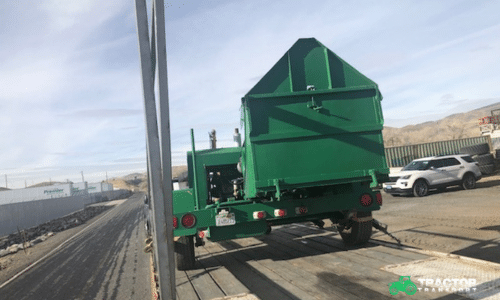
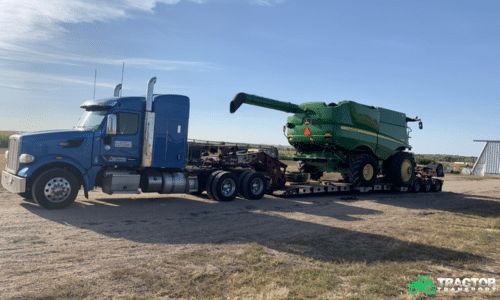
Balers, also referred to as hay balers, are standard farm machinery used to cut and compress a raked crop. While the name can suggest they’re only useful for hay baling, balers can work great for cotton, flax straw, and silage too. They’re designed to turn cut crops into compact bales that are easy to transport, store, and handle when the time comes.
Often, balers are used to dry and preserve the nutritional value of bundled plants. Plants can be bundled using various methods into rectangular bales or round bales, bound by netting, wire, twine, or strapping. The most common type of baler used in many large agricultural operations is the round baler, although rectangular balers have many advantages. Rectangular baler transport is also considered the most common.
Round Baler vs. Rectangular Baler
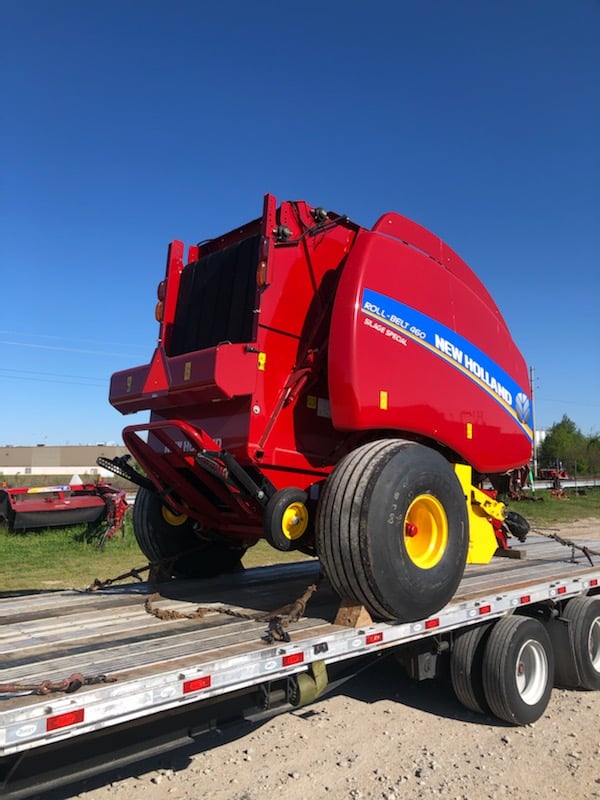
A round baler produces cylindrical, rolled bales that result in a ‘thatched roof’ effect that can withstand pressure from the elements. Cut plants are rolled up inside the baler using fixed rollers, rubberized belts, or a combination of the two, until they reach a predetermined size.
Round balers can have variable chambers that typically produce bales between 48-72 inches in diameter and up to 60 inches in width. Depending on the size, moisture content, and crop, these bales can weigh between 500 and 1,000 kg. Some farmers may also use roto-balers or mini round balers to produce round bales between 20-22 inches in diameter and 20-28 inches in width. These smaller bales usually weigh between 18-25 kg.
Once they reach the desired size, twine or netting is wrapped around the bale to help it hold its rounded shape. Then, the back of the baler swings open, and the full bale is discharged onto the ground. Though considered complete at this point in the baling process, some farmers choose to protect bales by wrapping them in plastic sheeting using a bale wrapper, especially if the bale will be stored outside. A bale wrapper can also help to convert a round bale of damp grass into silage.
When it comes to transport, rectangular bales are often considered easier to transport. There is little to no risk of rectangular bales rolling off a flatbed trailer for transport, and the rectangular shape means they can be stacked in solid slabs, both for transport and storage. Most rectangular balers have the option to produce bales that are twice as wide as they are long, meaning they can be stack in alternating overlapping groups in a robust brick-like structure.
When You’re Ready to Ship, We’re Ready to Help
We handle every step of your equipment transport safely, efficiently, and on schedule, so you can focus on what matters.
Balers are commonly used throughout the U.S. to build and store hay, silage, and other crops in a compact manner. Popular baler manufacturers that equip farmers with the ability to quickly, safely, and conveniently store large yields include:
Case IH
Challenger
John Deere
Krone
Massey Ferguson
New Holland
Vermeer
GET AN EXPERT QUOTE FOR YOUR TRACTOR SHIPPING NEEDS
Fill out the form above for a FREE quote. Call us at (877) 373-0109 to connect with a transport specialist today!
How to Transport a Baler
You won’t always need your hay baler on-site, especially outside of the harvest season. If you want to save space by storing unused equipment off-site, you’ll need a trailer that’s capable of handling the oversized load. Whether you’re moving site, getting rid of old equipment, or bringing in new hay balers, you’ll need a large trailer.
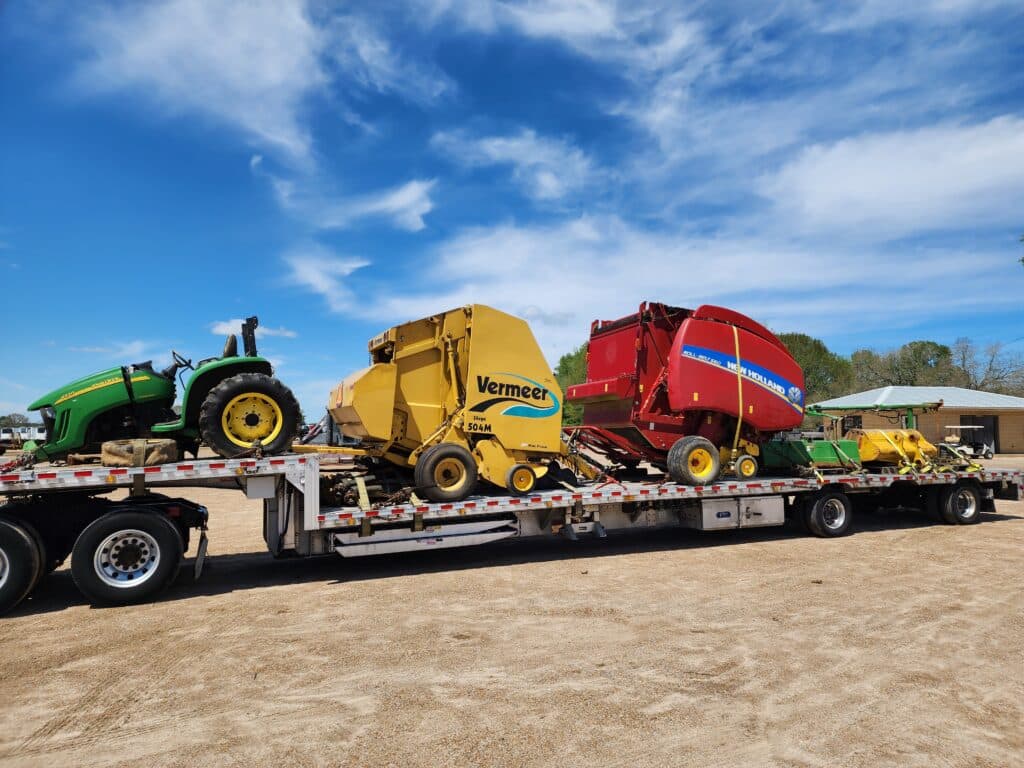
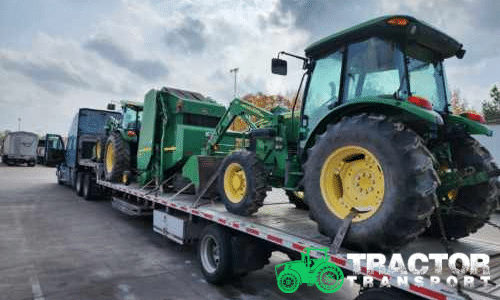
The recommended trailer for baler transport is a step-deck trailer. Large balers can be more than 9ft tall, which means they’re too tall to travel on a standard flatbed trailer legally. Flatbeds are restricted to equipment that is less than 8.5ft in height, so while they can be ok for small balers, larger balers will need a step-deck or alternative trailer. Large baling equipment can also weigh up to 10,000 lbs, which means you’ll usually need to transport one at a time. It is possible, however, to load multiple small balers onto the same trailer if you’re transporting smaller machinery.
You can transport a baler whole, and there are also ways that you can reduce their size to save on shipping costs. You can disassemble the equipment, including taking off the wheels to make the shipment meet the transport restrictions associated with flatbed shipping if desired. Most balers, if left whole, are backed onto step-deck or RGN trailers using a tractor. Before the equipment is backed onto your chosen trailer, make sure the machinery has been cleaned thoroughly, so that people handling the transport of your equipment can see the tie-down points and assess the condition of your baler effectively.
America’s Trusted Farm Haulers
Safely and reliably hauling farm equipment nationwide since 2009.