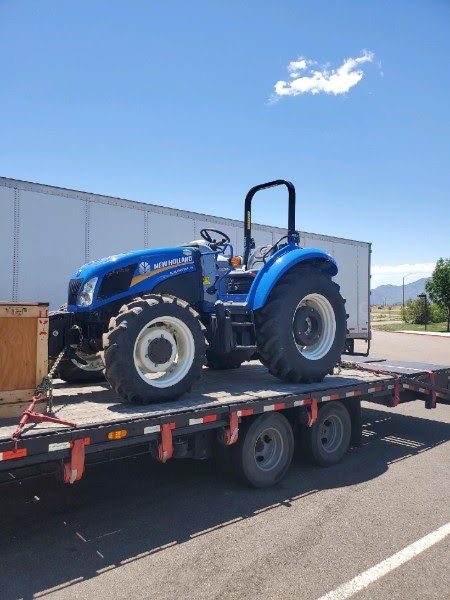
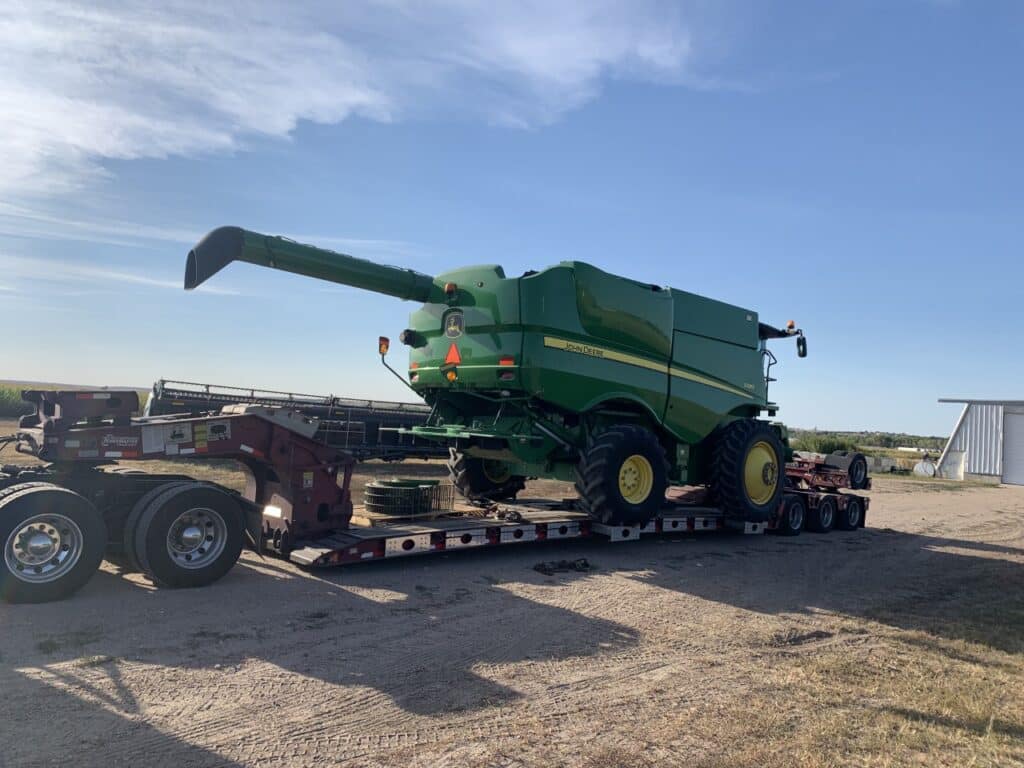
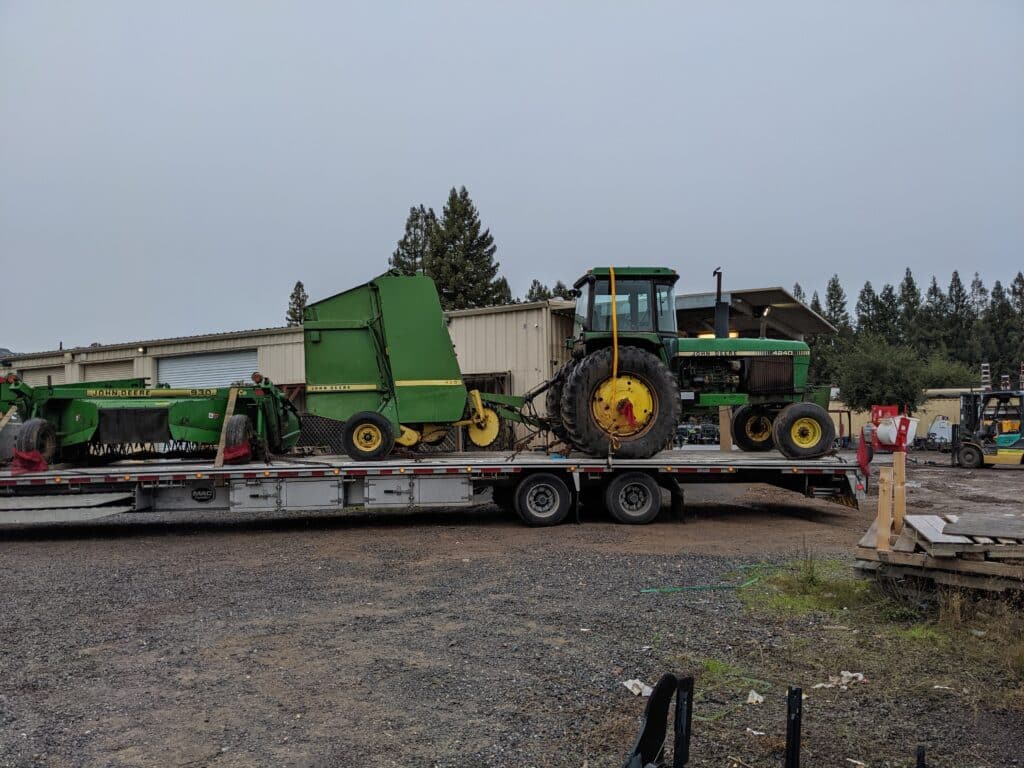
One upside to shipping farm tractors is that you can usually just drive them on the trailer. Self-powered and operational machinery enables you to load it onto a trailer for hauling with ease and convenience. But how do you load the tractor if it can’t start?
Loading a Non-Running Tractor on a Trailer
If you have a smaller utility tractor/UTV, you can leverage auxiliary loading equipment, such as cranes and forklifts to load the cargo. However, it’s critical to ensure that the crane’s chain-and-hook assemblies match the load’s weight to prevent unexpected falls that could damage the cargo.
For a relatively larger farm tractor, use chains, and a manual/automatic come-along tool.
Tie two chains, each on either side of the front axle outside the radius arm. Connect the chains in front of the tractor to form a single line running down the middle of the trailer and attach it to a come-along. The point where the two chains connect should be at a safe distance from the tractor to avoid scraping the hood sides.
Using the came-along, pull the tractor up the ramps onto the trailer, and position it in a manner that distributes its weight evenly to each axle. Having a driver control the tractor’s direction helps and saves you the hassle of coming down and checking the load’s orientation after every two/three pulls.
When You’re Ready to Ship, We’re Ready to Help
We handle every step of your equipment transport safely, efficiently, and on schedule, so you can focus on what matters.
Your tractor’s weight determines the number of chains and tie-down straps you’ll need to secure the load. Your tie-down chains must have a total strength that matches at least 50% of the equipment’s weight. You achieve that by matching the chain and hook binder grades. Check the number etched on the chains and cross-check it with the one marked on the boomer handle. The sum of total working load limits of all the tie-down chains is what should equal half your load’s weight.
Another universal rule is to have at least one chain hooked at each point of contact. It means that you’ll secure the load to the trailer at each wheel. Typically, you’ll need 4-5 chains, although that number may also vary depending on the jurisdiction.
Still, you need to adhere to some fundamentals and legal requirements when chaining the equipment down.
Tighten the chains properly to ensure the load doesn’t wiggle and shift while en route.
Fastened the tie-down/chains in a linear downward direction; it shouldn’t have twists, bends, or angles.
Wrap excess chains around the links to prevent them from becoming loose and compromising load safety.
Always inspect and review the chains and hook sizes to ensure they match. Mismatching them at any point of contact might make the chain snap.
GET AN EXPERT QUOTE FOR YOUR TRACTOR SHIPPING NEEDS
Fill out the form above for a FREE quote. Call us at (877) 373-0109 to connect with a transport specialist today!
Valuable Safety Tips When Loading a Tractor on a Trailer
Danger lurks in heavy-equipment loading areas. It would be best to take all the necessary safety measures and protocols to ensure that the loading crew works safely. You also have to have extensive knowledge about the trailer required for shipping your specific load and the securement procedure.
The first safety concern is to finding an even, firm ground for loading. That’s especially critical during wet conditions when the ground is muddy and slippery. Clean the ramps and place them correctly to match the tractor’s wheel position.
Tractor Transport has standard safety procedures for loading heavy equipment. Listed below are some safety precautions you can take to ensure the loading crew and cargo are safe. It’s essential to communicate clearly with the crew members and assign roles so that everyone knows their responsibilities. For instance, you need a spotter, tractor driver, weight and leverage specialists, and tie-down inspector. Always read the owner’s manual to know how to load and secure the tractor on the trailer. Only when you’ve inspected the load and confirmed that it’s well-secured should the truck start moving.
America’s Trusted Farm Haulers
Safely and reliably hauling farm equipment nationwide since 2009.