The Daily Bale
How to Safely Load and Unload Farm Equipment
Speak To A Live Specialist
Essential Tips to Safely Load and Unload Farm Equipment
- 5 min read
- By: William Thomas
Moving farm equipment isn’t just about horsepower—it’s about precision, planning, and safety. A tipped‑over combine or a shifted tractor can mean thousands of dollars in repairs, injuries to crew, and costly downtime during planting or harvest. That’s why safe loading and unloading practices are essential for farmers, ranchers, ag businesses, equipment dealers, and municipal departments.
At Tractor Transport, we’ve seen firsthand how small mistakes can create big problems. That’s why our teams conduct safety evaluations before every standard and oversize haul, ensuring your machinery is loaded, secured, and delivered without incident. This guide walks you through the essentials of farm equipment loading and unloading, while showing why professional haulers like Tractor Transport are the safest choice.
Farm Equipment Loading and Unloading Safety Basics
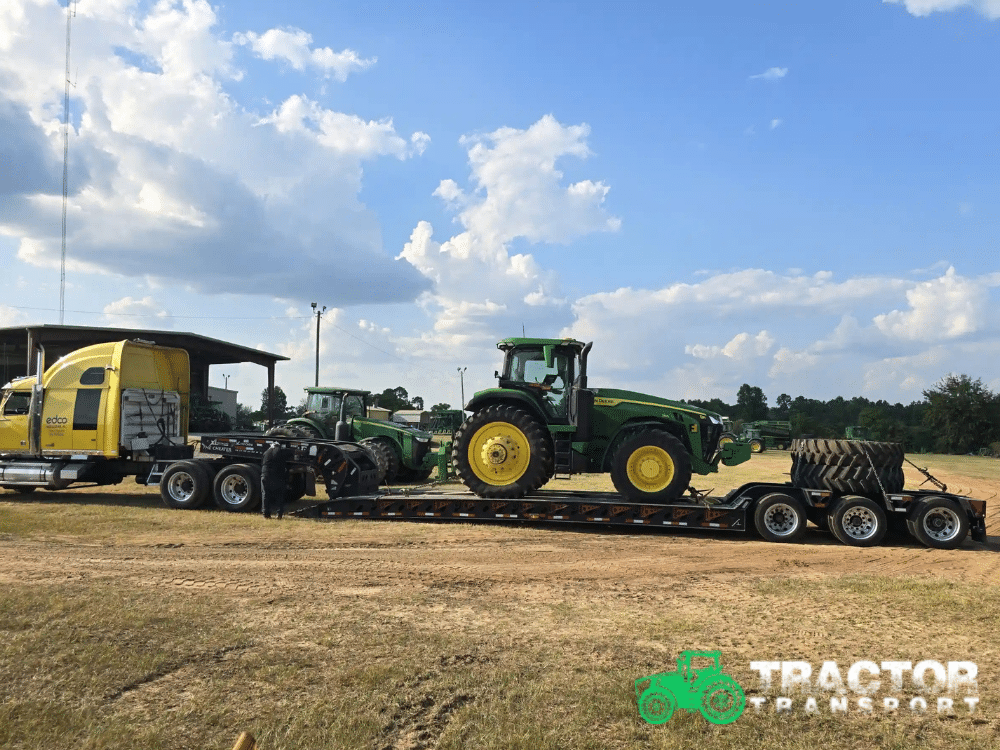
Loading and unloading farm machinery requires precision because these machines are unlike standard vehicles. A typical 4WD tractor can weigh 30,000–50,000 pounds, with a center of gravity that shifts depending on attachments like loaders or dual wheels. That makes them prone to tipping if ramps aren’t level or if tie‑downs fail.
Common hazards include:
- Rollovers on ramps caused by uneven approaches or steep angles
- Load shifts from poor tie‑downs or sudden braking
- Chain or strap failures under road vibration
General safety guidelines:
- Always confirm your machine’s specs: weight, height, width, and center of gravity.
- Consult the operator’s manual for securement points.
- Require PPE for everyone involved: hard hats, gloves, steel‑toe boots, and high‑visibility vests.
- Use spotters and communication devices to coordinate movements.
Tractor Transport crews follow these checks before every job, reducing risk from the start.


When You’re Ready to Ship,
We’re Ready to Help
We handle every step of your equipment transport safely, efficiently, and on schedule, so you can focus on what matters.
Preparing Your Trailer and Work Area for Farm Machinery Loading
A safe move begins with careful planning, starting with the right trailer and a hazard‑free work zone. Choosing the proper trailer type for shipping and preparing the area ensures efficiency, reduces risks, and protects valuable equipment. A well‑organized setup gives operators confidence and sets the tone for a smooth loading process. Tractor Transport emphasizes preparation as the
foundation of every safe move.
Trailer selection matters:
- Lowboy/RGN trailers→ Best for tall sprayers or combines, thanks to their low deck height.
- Step‑deck or flatbed with beaver tail→ Ideal for tractors and implements.
Work area requirements:
- Level ground (avoid slopes; even slight angles increase rollover risk).
- Firm surface (packed gravel or dirt only, never mud).
- Free of obstacles like rocks, branches, or overhead wires.
Inspection checklist:
- Ramps: Check for bends, cracks, and confirm weight ratings.
- Deck: Ensure no rot, loose boards, or slick spots.
- Tie‑downs: Grade 70 chains and binders only — no lightweight alternatives.
- Trailer GVWR: Should exceed your load capacity — a 20% margin is best practice.
Tractor Transport trailers are maintained to exceed DOT standards, eliminating compliance concerns. Our commitment to safety means your equipment is loaded on reliable, inspected trailers every time. By starting with the right trailer and a properly prepared work area, you set the stage for a smooth, stress‑free haul.

GET AN EXPERT QUOTE FOR YOUR TRACTOR SHIPPING NEEDS
Fill out the form above for a FREE quote. Call us at (877) 373-0109 to connect with a transport specialist today!
Step‑by‑Step Process for Loading Farm Equipment on a Trailer
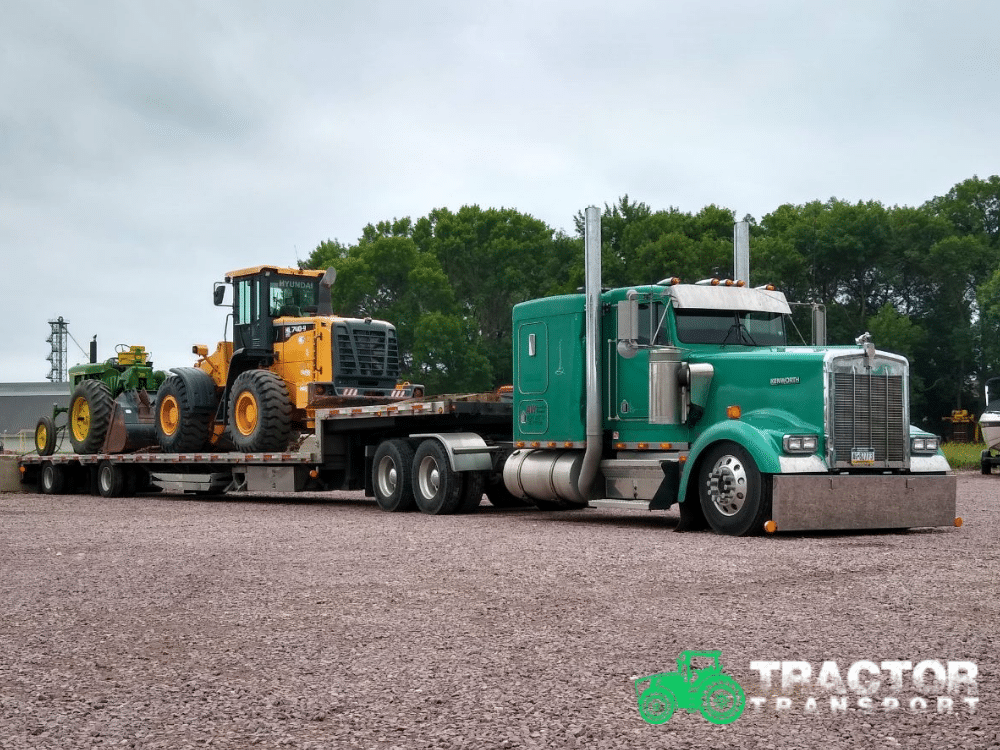
Approach straight and controlled — position machine 10–15 feet back, centered with ramps.
How to Properly Secure Farm Machinery for Transport
Once your equipment is loaded, securement becomes the safeguard that keeps everything stable on the road. Proper tie‑downs and compliance with FMCSA regulations are not optional—they’re essential for safety and legality. Tractor Transport uses industry‑approved gear and techniques to guarantee your machinery stays firmly in place. Securement is where preparation meets protection.
Key rules:
- Tie‑down gear: Use rated Grade 70 transport chains, hooked only to manufacturer‑approved points.
- FMCSA regulations: At least four tie‑downs for equipment ≥10,000 lbs, with combined working load limit equal to at least 50% of cargo weight.
- Best practice: Six to eight tie‑downs for agricultural machinery.
- Cross‑binding: Criss‑cross chains front‑to‑rear and side‑to‑side to counter surge and sway.
- Final check: Tighten binders evenly, lock handles, bounce the trailer, and re‑check after 50 miles.
By following FMCSA standards and best practices, Tractor Transport ensures every agricultural move is safe and compliant. Our team double‑checks every binder, chain, and connection before hitting the highway. With professional securement, you can be confident your equipment will arrive exactly as it left—ready to work.
Safe Unloading Techniques for Farm Equipment
Unloading may seem straightforward, but fatigue after a long haul makes it one of the riskiest stages. Careful preparation and controlled movements are essential to avoid accidents or equipment damage. Tractor Transport emphasizes vigilance during unloading, treating it with the same importance as loading. Safety doesn’t end when the trailer stops—it continues until the machinery is on solid ground.
Best practices:
Tractor Transport’s unloading practices protect both property and equipment, ensuring a smooth finish to every haul. By prioritizing ground stability, clear communication, and controlled speed, we eliminate unnecessary risks. With professionals on your side, unloading becomes a safe, seamless conclusion to the transport process.
When to Hire a Professional for Farm Equipment Loading and Hauling
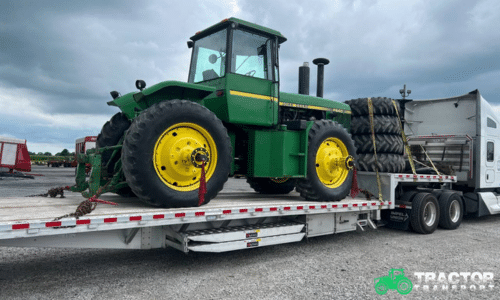
While DIY loading may work for short, simple moves, complex hauls demand professional expertise. Oversized equipment, long‑distance routes, and hazardous terrain introduce risks that go beyond basic preparation. Tractor Transport specializes in handling these challenges with the right permits, insurance, and equipment. Knowing when to call in experts can save you time, money, and stress.
Hire professionals when:
- Equipment is oversized, complex, or difficult to maneuver
- Long‑distance hauls require permits, pilot cars, or escorts
- Terrain around the jobsite is irregular or hazardous
- Liability risks and insurance coverage are a concern
Tractor Transport is the trusted, stress‑free solution for complex agricultural equipment transport. From oversized loads to multi‑state routing, our team manages every detail with safety and compliance in mind. Choosing professionals means protecting your investment and ensuring your equipment arrives safely, no matter the distance or difficulty.
Why Farmers Choose Tractor Transport for Safe Farm Machinery Loading
Farmers and agricultural businesses nationwide turn to Tractor Transport because we deliver more than just logistics—we deliver peace of mind. Our combination of expertise, dependable equipment, and safety‑first procedures sets us apart in the industry. Whether moving a single tractor or an entire fleet, we tailor solutions to fit your needs. With Tractor Transport, every move is handled with care and professionalism.
Farmers and ag businesses nationwide rely on Tractor Transport because we combine expertise with dependability:
- Trained drivers experienced with tractors, combines, sprayers, and more.
- Proper trailers for every type of farm machinery.
- Safety‑first procedures used nationwide.
- Transport across the U.S., Canada, and Mexico.
- Hands‑off service: we load at your farm, unload ready‑to‑run at destination—fully insured.
Ready to move your farm machinery? Tractor Transport provides hands‑off service, from loading at your farm to unloading at your destination, fully insured and ready to run. Request a free quote today at Tractor Transport or call 1‑877‑373‑0109, and experience the difference of working with a team dedicated to your success.
America’s Trusted Farm Haulers
Safely and reliably hauling farm equipment nationwide since 2009.
Frequently Asked Questions
Hard hats, gloves, high-visibility clothing, wheel chocks, radios, and a fire extinguisher are all essential. Having the right safety gear on hand protects everyone involved and ensures loading is carried out in a controlled, hazard-aware environment.
Load on firm, level ground; approach the trailer straight; lower all attachments; maintain creep speed; and use a spotter throughout. These measures keep the center of gravity stable and dramatically reduce the risk of a tip-over during the loading process.
Lowboy/RGN trailers are best for tall machines with strict height clearances, while step-deck or hydraulic beaver-tail trailers work well for wheeled equipment. Tractor Transport selects the right trailer based on your machinery's specific dimensions and weight.
Yes. Loads exceeding 8′6″ wide, 13′6″ tall, or legal weight limits require state and local permits and may also need pilot car escorts. Tractor Transport manages all permitting on your behalf to keep your shipment fully legal and on schedule.
Absolutely. Our drivers load, secure, transport, and unload your equipment at the destination — fully insured and ready to work. You can hand off the entire process with confidence, knowing every step is handled by experienced professionals.
Popular Articles
SERVICES
Tractor Hauling
We ship heavy and oversized tractors nationwide and to every state, including Alaska and Hawaii.
Trailer Shipping
We offer the best trailer to ship your farm equipment from flatbeds, RGNs, step decks, and more.
LTL Shipping
Your smaller farm equipment can share trailer space with other transports, often lessening costs.
Farming and Agriculture Transport
We offer custom farming and agriculture equipment transport solutions.
Drive-Away
A driver will get behind the wheel of your vehicle or equipment and drive it to the delivery destination.
International Transport
Ship your farm equipment to Canada or Mexico. We also offer port-to-port options for overseas shipping.